
"How much should we be spending on IT?" is one of the most common questions we hear from owners in Toledo and across Northwest Ohio. It is also one of the hardest to answer with a single number, because the right budget depends on your business rather than an industry average. There are clear factors that shape the cost though, and once you know them, planning gets much easier.
What actually drives your IT costs?
IT spending is not one line item. It is a mix of people, tools, and risk. A few things move the number more than anything else:
- Number of users and devices. More people and more machines mean more to support, secure, and maintain.
- How much you rely on technology. A business that stops entirely when systems go down needs more resilience than one that does not.
- Security and compliance needs. Regulated industries and businesses handling sensitive data carry more requirements.
- The age of your equipment. Older hardware and software cost more to keep running and are riskier to depend on.
- Whether support is proactive or reactive. Paying by the emergency almost always costs more over time than steady, managed support.

What pricing models will you run into?
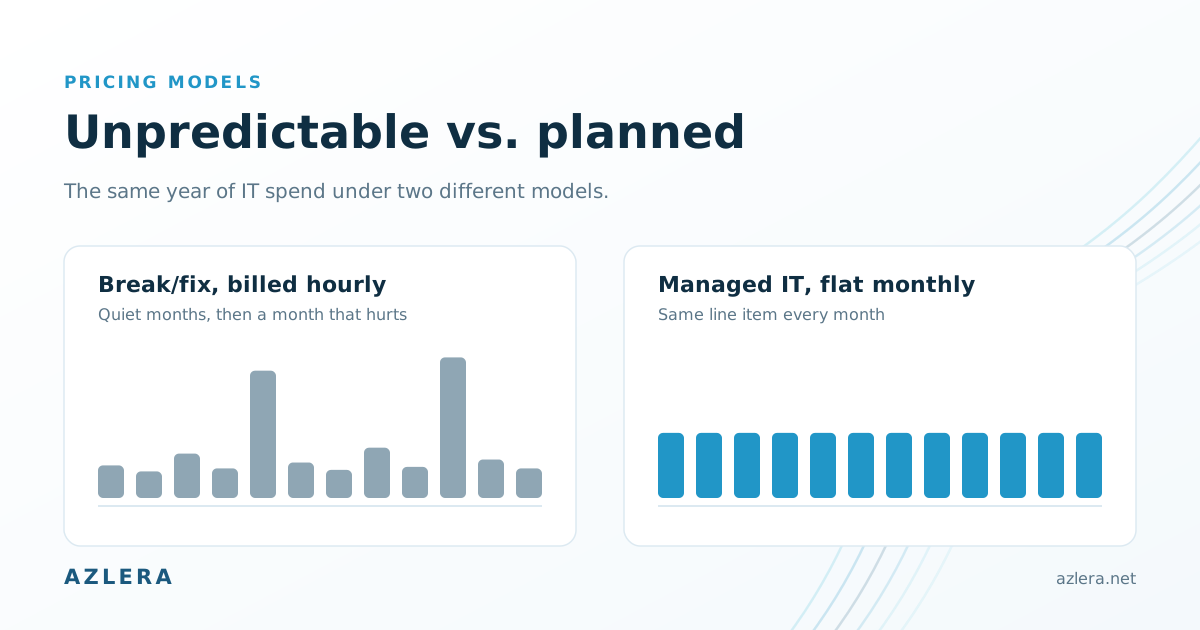
Most small businesses choose between two approaches. The first is break/fix. You call someone when something goes wrong and pay by the hour. It feels cheap right up until the month a server fails or a laptop gets compromised, and then costs spike exactly when you can least afford the downtime.
The second is managed IT, usually billed as a flat monthly rate based on your size and coverage. You trade unpredictable emergency bills for a steady line item, and your provider is paid to prevent problems rather than profit from them. For most growing businesses, predictable beats cheap-until-it-is-not. We explain how our own model works on our pricing page.
How do you build a budget you can defend?
Rather than starting with a dollar figure, start with what your business actually needs to run reliably and safely. Add up the essentials, meaning support, security, backups, and the software your team depends on. Then decide how much downtime and risk you are willing to tolerate. That framing turns "what should we spend?" into a decision you can actually make.
The most accurate way to land on a real number is an assessment of your current setup. A good provider will scope your environment, flag your biggest risks, and give you a clear quote. No guessing, and no one-size-fits-all package.
What should you not cut?
If the budget is tight, cut scope before you cut safety. Backups, cybersecurity basics, and a way for your team to get help are the three things that cost far more to skip than to keep. Nice-to-have projects can wait a quarter. Recovering from a ransomware incident without working backups cannot.
Want a real number instead of a range?
We will scope your setup, flag the risks, and give you a clear quote. No cost, no obligation.
Get a free IT assessment
Related service: Managed IT services